Course description
Foundations II: Technical Introduction to Pathogen Genomic Epidemiology: Mutations, Transmission, and Phylogenetics introduces learners to the molecular foundations underlying pathogen genomic sequencing.
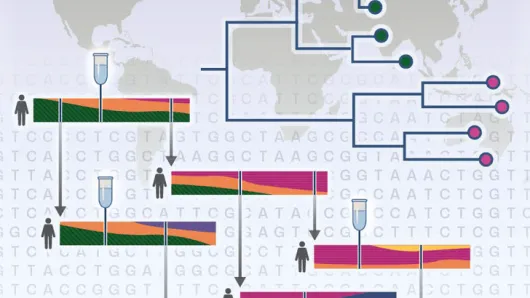
The course explores how pathogens accumulate mutations as they replicate, creating distinct genomic patterns that can be leveraged to understand infectious disease transmission. You will examine the critical role of mutations in shaping genomic similarity, and how these patterns are visualized using phylogenetic trees to reconstruct relationships between infections. Building on this foundation, the course presents methods for integrating genomic and epidemiological data—including demographic details and contact tracing—to enhance outbreak investigations and support more informed public health decisions.
Key concepts are presented in brief, accessible video segments, with assessments throughout that allow you to check your understanding and apply your learning. With a focus on practical application and scientific principles, this course equips learners with the knowledge needed to inform effective disease surveillance and response in real-world public health contexts.