Sequencing Strategies for Pathogen Genomics
Image
Pace
Self-paced
Subject
Difficulty
- Advanced
Platform
Continuing Education from Harvard Medical School
Describe common approaches to constructing a sequencing library and understand their general differences.
Explain how pathogen biology, sample characteristics, use cases, and other considerations can constrain or enable different sequencing strategies.
Evaluate and justify the selection of an appropriate sequencing strategy for common public health applications.
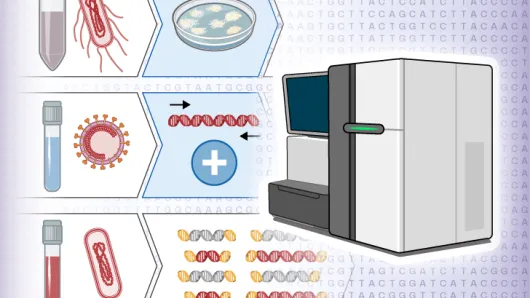
Sequencing Strategies for Pathogen Genomics guides learners through the key decisions that shape the generation of genomic sequencing data for public health applications. Building on the foundations of pathogen genomics, this course unpacks the sequencing workflow from sample to data, introduces a practical toolbox of sequencing library construction approaches—including untargeted, amplicon-based, and target capture methods—and explains how starting material (cultured isolates versus direct specimens) influences what is technically feasible and scientifically appropriate.
This course examines how different genomic sequencing strategies support core public health use cases such as pathogen characterization, genomic surveillance, and outbreak investigation, and how choices around cost, turnaround time, throughput, and instrumentation affect what questions can realistically be answered. By the end of the course, learners will understand how sequencing strategies align with specific pathogens, specimens, and program goals, and appreciate the trade-offs that underpin sequencing strategy choices in practice.
Key concepts are presented in brief, accessible video segments, with assessments throughout to help you check your understanding and apply your learning. With a focus on applying conceptual understanding and core principles to public health processes, this course equips learners to see how choices about sequencing strategy shape the use of pathogen genomic data in public health settings.